How NAPA Turned Hey NAPA into a Model for Responsible AI Adoption
Hey NAPA shows what responsible AI adoption can look like: start with a real problem, build trust through transparent answers, and keep improving once value is clear.
Your operation runs on people filling gaps between systems.
Dispatchers compensate for plans that don't reflect what's happening. Supervisors piece together yesterday instead of shaping today. Billing coordinators trace discrepancies across three systems to find one missing ticket.
The work gets done. But it gets done through heroics. And heroics don't scale, don't compound, and don't survive a key person's day off.
What if the system did that work instead of the people?
The difference is not that it sounds intelligent.The difference is that the work actually gets done.
Agent XBE works across the entire XBE system of action: dispatching, scheduling, materials, quoting and pricing, fleet management, ticketing, financial tracking, and every connected integration.
Multi-step work happens inside the platform instead of stopping at a suggestion. Production plans are built before your team arrives, rate reconciliations are traced to root cause, and branded reports land ready to use.
The platform, channels, files, and outside systems meet in one working surface. Internal threads, email notifications, organization documents, telematics data, and ERP records are accessible in the same conversation.

Memories, instructions, and playbooks compound over time. Preferences carry across sessions, branch procedures become standing orders, and domain workflows start with real operating context.
Every action stays inside permissions, audit trails, and brokered credentials. The agent inherits user permissions, logs every tool call, and never exceeds what the operator is authorized to do.
AGENT XBE DEEP DIVE
Watch the overview, then map the same operating patterns against your own operation.
What no general-purpose AI tool can do.
General-purpose AI can draft a paragraph. It cannot dispatch a truck, reconcile a material ticket, or send a shift alert to your crew from inside the operating stack.
Agent XBE operates inside the XBE system of action: dispatch, scheduling, fleet, ticketing, rates, financials, and every connected integration. When it investigates a discrepancy or builds a plan, it is working in the same system your team runs.
Tell it to use short tons, default to Branch 290, or follow a branch procedure once, and that operating context carries forward across sessions instead of resetting every conversation.
Daily production recaps, time card audits, weather alerts, and scheduling oversight checks can run on schedule and deliver finished results before your team arrives.
MISSIONS
Missions flip the model. The agent starts the work, does the work, and notifies you when results are ready by email, text, or in-app. Your team can send it, schedule it, or launch it from a template with the prompt already built.
Daily at 5:47 AM. Reviewed 4 plans for today. Found: 2 missing shift assignments, 1 material type mismatch. Email sent at 5:48 AM.
You sent it at 3:15 PM: "Check on Elm St and let Jake know how we're looking." Checked J-4821: 62% delivered, 1,488 of 2,400 tons. Four trucks active. On pace for 5:30 PM completion. Slack sent at 3:16 PM.
A billing coordinator opens Weekly Rate Reconciliation from her favorites. Agent XBE pulls last week's transport orders, cross-references contracted rates, flags 12 discrepancies totaling $4,200, and delivers the report to the inbox and library.
Real operations. Real work. Already running in Heavy Operations.
The value is not abstract. The work is already happening across planning, reporting, compliance, and operator enablement.
Production plans are built before the first truck rolls. Shift assignments are checked, material types are verified, and crew allocations are confirmed. When conditions change mid-day, the agent re-checks the plan against what is actually happening.
Daily production recaps, driver performance summaries, weekly tonnage rollups, and job completion reports are generated before anyone asks. Nightly weather checks trigger rescheduling alerts, and time card audits run every evening.
Rate reconciliations are traced across transport orders, contracted rates, and billing records. Material ticket audits catch missing or mismatched records before they become revenue leakage, and documentation gaps surface before an audit does.
XBE customers get a community as well as software. Working groups of operators share what is working in the field, and Agent XBE can organize, prepare, and follow up on those sessions with a briefing before the meeting even starts.
Designed for the complexity, not around it.
Heavy materials, logistics, and construction do not simplify. These capabilities are designed to match the complexity of XBE's system of action and the businesses it runs.
You do not stare at a screen waiting. Desktop notifications, sound cues, and browser-tab badges let the agent call you back when the work is finished.
"Always use short tons." "Default to Branch 290." "I prefer tables over charts." Preferences carry forward across sessions instead of being repeated.
Share the session so your PM can watch the agent work in real time. A side chat lets your team coordinate without interrupting the transcript.
Slack, Google Workspace, telematics, ERP systems, and ticketing systems can all participate in one operating session. One conversation can span every system involved in the task.
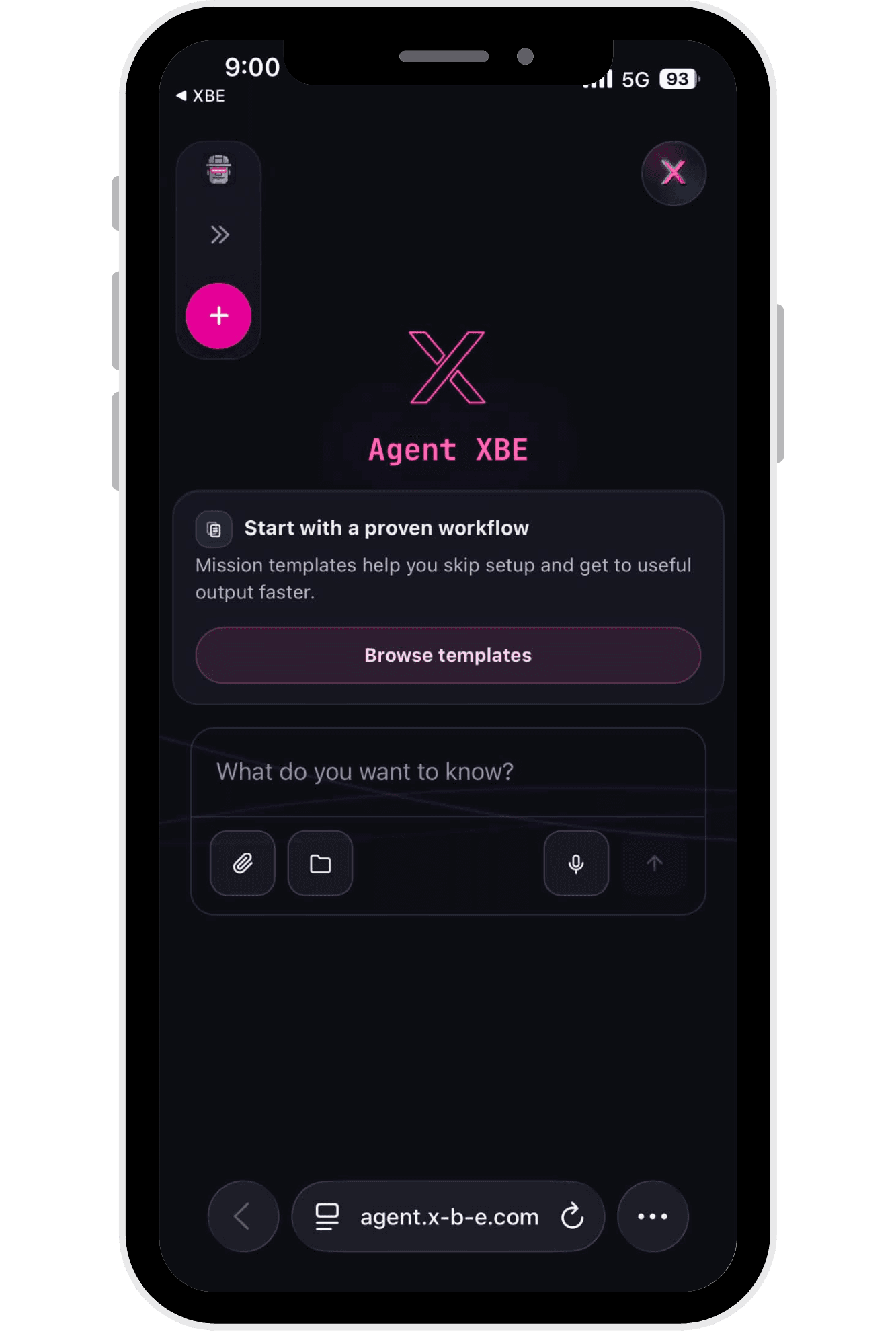
Agent XBE lives inside the XBE platform your team already uses. No separate app, no new login, and no disconnected workflow just to access the agent.
Agent XBE works on mobile in the field, on the road, and at the plant. Check a job status, process a delivery ticket, or ask about tomorrow's plan away from the desk.
If you want to see where Agent XBE can start carrying work in your operation, that conversation is easiest when we map it against the system you are already trying to run.
Latest Views
Recent ideas, product thinking, and operating lessons connected to Agent XBE.
Hey NAPA shows what responsible AI adoption can look like: start with a real problem, build trust through transparent answers, and keep improving once value is clear.
AI agents are removing one long-standing organizational bottleneck, but many companies have not yet recognized the next one: coherence.
Five features are helping teams move Agent XBE from a helpful individual tool to something an entire operation can run on.